

ISLAMABAD: Federal Ombudsperson for Protection Against Harassment (FOSPAH) Ms. Fauzia Viqar underscored the need for behavioural change and public trust in state institutions while addressing the Aawaz II two-day national forum titled “Bridging the Gap: A Roadmap for Social Change.”
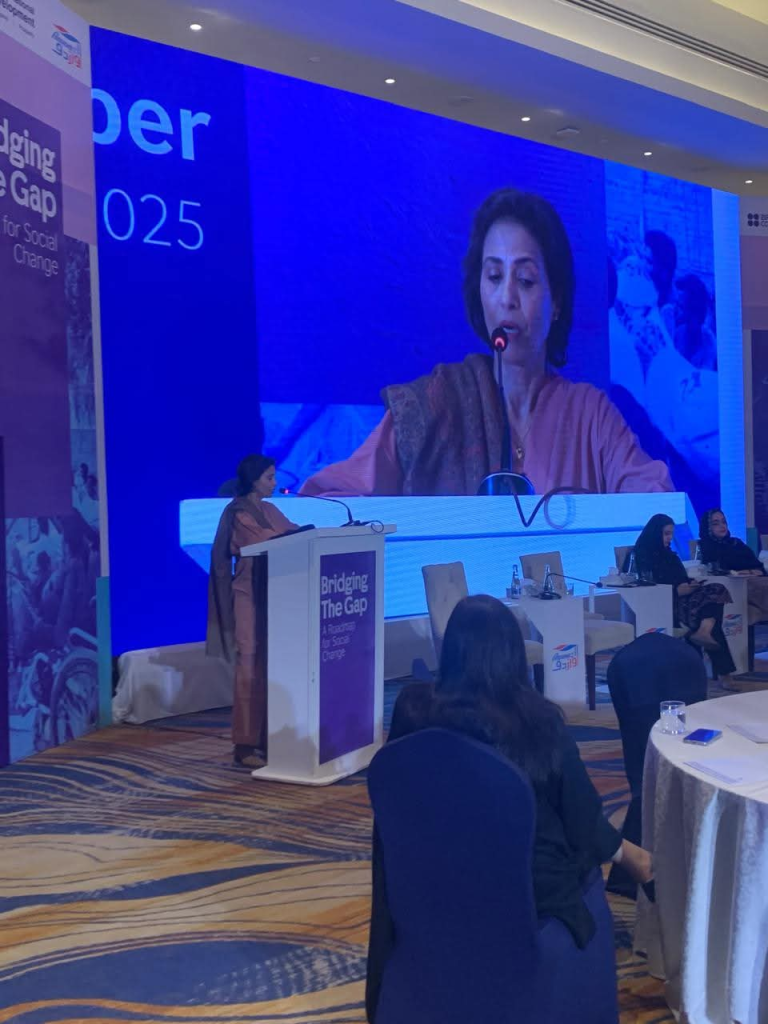
Speaking during the thematic session on the prevention of gender-based violence (GBV) and child marriage, Ms. Fauzia Viqar emphasized that effective redressal of GBV is closely linked to societal attitudes and workplace conduct. She noted that harassment and discrimination affect all genders and that legal and institutional mechanisms already exist to address these issues.
“Despite the presence of laws and complaint mechanisms, a trust deficit between citizens and the state prevents many people from seeking redress,” she said, stressing the importance of awareness, accessibility, and confidence in institutions such as FOSPAH.
She highlighted FOSPAH’s continued efforts to strengthen accountability, promote dignity at workplaces, and ensure timely justice through awareness sessions, institutional engagement, and accessible complaint mechanisms across the country.
The forum brought together government officials, civil society leaders, and community representatives from Punjab and Khyber Pakhtunkhwa to share evidence-based strategies for sustaining community-led initiatives addressing GBV, child marriage, and social exclusion.
The event also featured insights from British Council Pakistan Country Director Mr. James Hampson and representatives of the Foreign, Commonwealth & Development Office (FCDO), who highlighted the Aawaz II programme’s reach of over 36 million people across 37 districts. Senior officials from provincial governments and civil society discussed policy reforms, youth engagement, and community advocacy contributing to lasting social change.
Implemented by the British Council and funded by FCDO, the Aawaz II programme has mobilised more than 48,000 volunteers and established over 1,400 community forums. Through collaboration with institutions like FOSPAH, the programme aims to strengthen citizen-state linkages, promote inclusive governance, and advance protections against harassment and gender-based violence.