
ISLAMABAD, Oct 29 (APP): A high-level delegation from Bangladesh visited the Federal Tax Ombudsman (FTO) Secretariat to study Pakistan’s tax ombudsman model, marking a significant step toward regional collaboration in governance, taxpayer rights, and institutional reform.
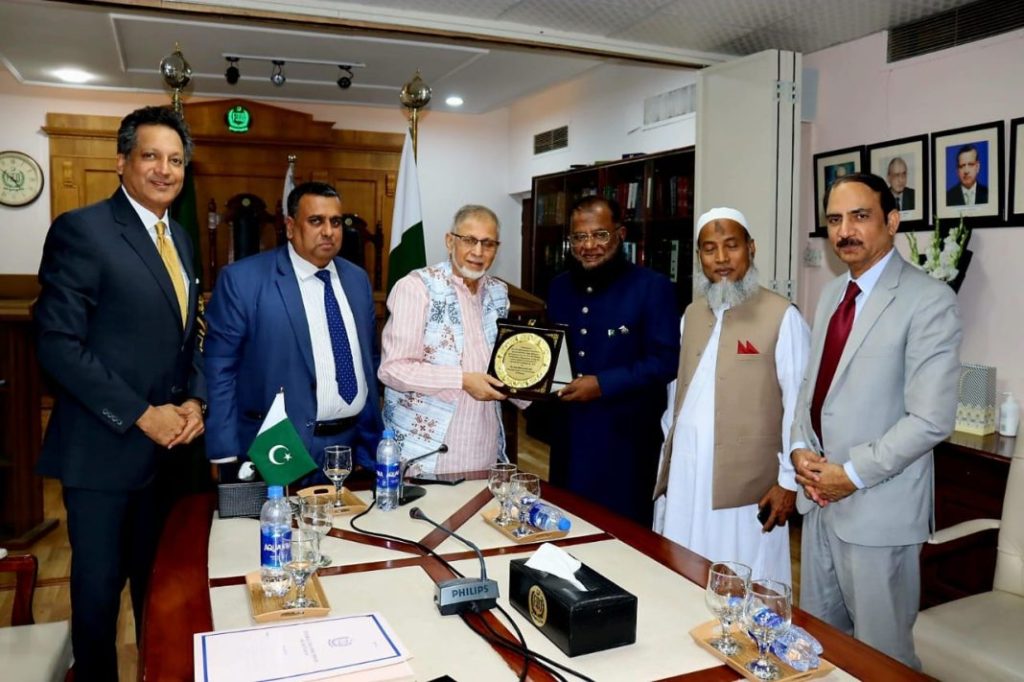
Led by Bangladesh’s State Minister for Finance (Special Assistant) Dr. Anisuzzaman Chowdhury and accompanied by High Commissioner Iqbal Hussain Khan, the delegation was warmly received by Federal Tax Ombudsman Dr. Asif Mahmood Jah, FTO Registrar Khalid Javed, and Advisor (Legal) Almas Ali Jovindah.
The primary focus of the visit was the Federal Tax Ombudsman’s performance, structure, and impact on tax-related grievance redressal. Dr. Asif briefed the visitors on the FTO’s mandate, highlighting its role in ensuring taxpayer facilitation, promoting administrative justice, and fostering trust in the tax system.
He shared that the FTO has helped recover over Rs 23 billion for taxpayers, with most complaints resolved within 34 days demonstrating both credibility and efficiency. The institution also conducts Informal Dispute Resolution (IDR) to cut down litigation costs and timelines, empowered by Section 33 of the FTO Ordinance 2000.
Mr. Almas Ali Jovindah provided a detailed presentation on the global evolution of the Ombudsman system, underlining its relevance in modern governance as a swift, cost-free avenue for justice. He linked the roots of the concept back to Islamic governance under Hazrat Umar (RA), its institutionalization in the Ottoman Empire, and global expansion post-UN endorsement in 2014.
The FTO’s unique strength lies in its tax-specific expertise. Staffed entirely by professionals with taxation backgrounds, it remains the only ombudsman institution in Pakistan with sector-specific specialization, which has enabled it to resolve complex issues effectively.
Dr. Anisuzzaman praised the FTO model as a benchmark for transparency and citizen-focused service delivery, expressing interest in adapting similar practices in Bangladesh. He acknowledged Dr. Asif’s leadership in transforming the FTO into a reform-driven and responsive institution.
The visit concluded with a symbolic tree-planting ceremony led by Dr. Anisuzzaman, reflecting the spirit of cooperation and the beginning of a growing partnership between Pakistan and Bangladesh in public sector reform and accountability.