
The OIC Ombudsman Association (OICOA), in collaboration with the Mediator of the Kingdom of Morocco, organized an online webinar titled “Evidence Based Policy Making and the Ombudsman’s Contributions in Legislative Reform” on 5 March 2026.
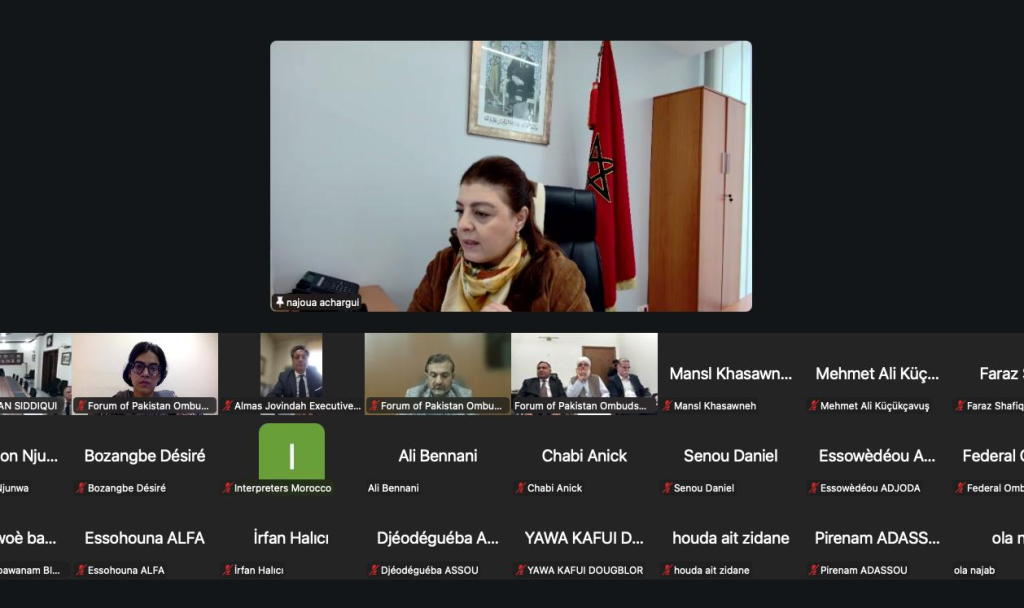
The session was delivered by Mrs. Najoua Achargui, Head of the Studies and Reports Unit at the Mediator of the Kingdom of Morocco. In her presentation, she explained how ombudsman institutions can utilize complaint data, institutional observations, and analytical reports to support evidence based policy formulation and legislative reform. Drawing on her experience in institutional reporting and human rights oversight, she highlighted the importance of transforming complaint trends into policy insights that enable governments to address systemic governance challenges.
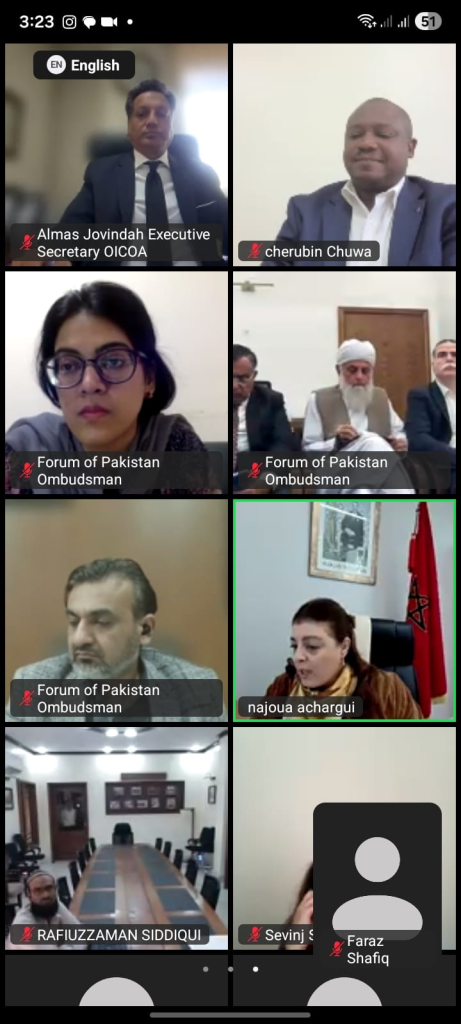
The discussion further emphasized the growing role of ombudsman institutions in identifying administrative gaps, strengthening governance practices, and contributing to meaningful reforms through structured analysis and recommendations. The webinar was conducted in Arabic with simultaneous interpretation in English, enabling broader participation from international institutions.
The session brought together 44 representatives from various ombudsman institutions, including the Ombudsman Institution of Türkiye, Mediator of Benin, Mediator of Togo, Mediator of Tunisia, Tax Ombudsman Service of Tanzania, Provincial Ombudsman Punjab, Provincial Ombudsman Sindh, Provincial Ombudsman Khyber Pakhtunkhwa, Provincial Ombudsperson Khyber Pakhtunkhwa, Federal Ombudsman of Pakistan, and the Federal Tax Ombudsman of Pakistan, among others.
At the conclusion of the session, Mr. Almas Ali Jovindah, Executive Secretary of OICOA, thanked the speaker for her valuable insights and noted that the discussion would be particularly beneficial for institutions engaged in preparing annual reports, policy briefs, and analytical studies aimed at improving governance and public administration.
The webinar reflects OICOA’s ongoing commitment to knowledge sharing, institutional collaboration, and strengthening the role of ombudsman institutions in promoting accountability, transparency, and effective governance.