
ISLAMABAD: At the Pakistan Governance Forum 2026, during the Equity Hub panel discussion titled “Unlocking Women’s Economic Potential through Education and Inclusion,” leading national and international stakeholders emphasized the urgent need to bridge Pakistan’s education-to-employment gap.
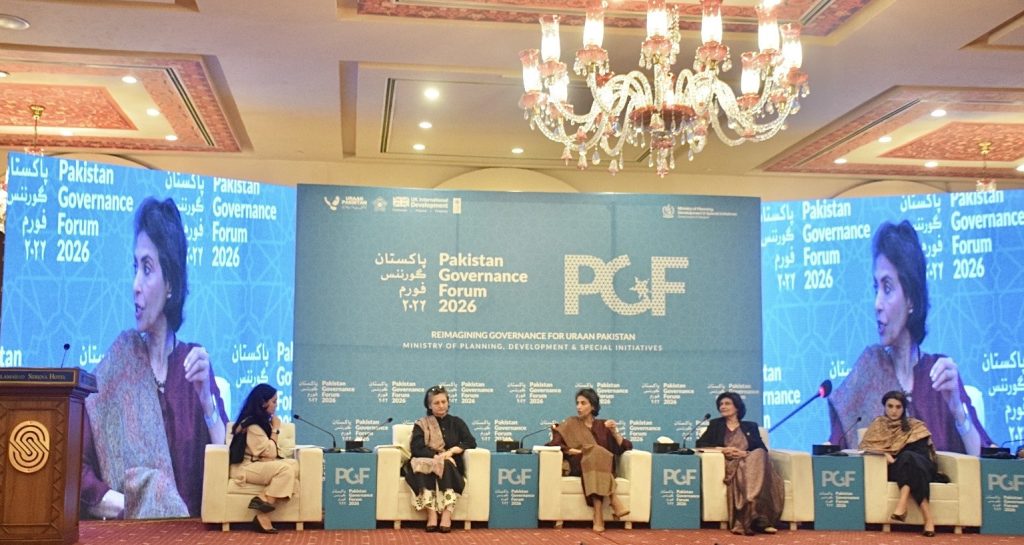
The session brought together representatives from UN Women Pakistan, the Federal Ombudsperson Secretariat for Protection Against Harassment (FOSPAH), the Malala Fund, and other key institutions to foster collaborative dialogue on advancing gender equity through education, protection, and inclusive economic reforms.
Among the distinguished panelists was Fauzia Viqar, Honourable Ombudsperson, who highlighted FOSPAH’s mandate under the 2010 law and its 2022 amendments. She noted that the institution addresses complaints from men, women, and transgender persons across both formal and informal sectors. While most harassment cases are reported from the formal sector, she pointed to limited visibility in the informal economy, including among domestic workers, stressing the need for concrete measures to extend protections to vulnerable groups.
Ms. Viqar also addressed institutional unpredictability and power struggles over oversight mechanisms, emphasizing that accountability must be systemic rather than person-centric. She underscored the evolving nature of work in the digital age, noting that technological transformation presents both new risks and new opportunities that require adaptive policies and forward-looking strategies.
Referring to Bangladesh as a case study, she cited research-backed industrial and digital integration models that have enabled large-scale female participation in evolving value chains. She stressed that Pakistan must strategically align education, skills development, labor protections, and technology governance to ensure women are not left behind in the digital economy.
Echoing these concerns, Jamshed Kazi, UN Women Country Representative, highlighted that 13.7 million girls remain out of school, while women’s mobile ownership stands at only 31 percent. He called for integrated pathways linking education, skills development, labor markets, and digital inclusion.
Meanwhile, Rida Qazi, Adviser to the Chairman Senate on Special Initiatives and Investments, emphasized the importance of recognizing the care economy. She noted that women in Pakistan perform nearly ten times more unpaid care work than men and urged investment in childcare infrastructure, flexible work arrangements, and fiscal incentives to reduce time poverty.
The panel concluded that strengthening education-to-employment pathways, expanding workplace protections across both formal and informal sectors, accelerating digital inclusion, and recognizing the care economy are central to unlocking women’s economic potential and aligning Pakistan’s reform agenda with international standards.